

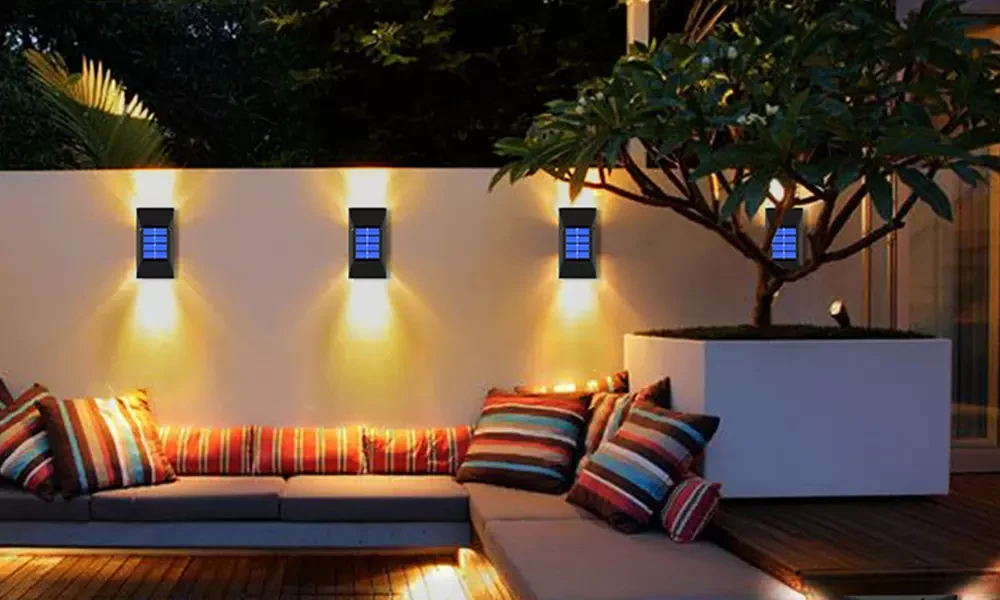
How Current Solar Wall Lights Perform
Solar wall lights have improved significantly over the past five years. Larger photovoltaic panels, more efficient LED arrays, and improved lithium battery chemistry have produced outdoor solar fixtures that deliver reliable nightly output across a wider range of charging conditions than previous generations. The performance gap between solar and low-voltage hardwired alternatives has narrowed substantially for accent and pathway applications.
The charging requirement remains the fundamental constraint of solar technology: the panel needs direct sunlight exposure during peak charging hours to power the LED array through the night. In shaded locations – under dense tree canopy, on north-facing surfaces, under overhangs that block direct sun – solar fixtures underperform their specifications regardless of panel quality. Location assessment before installation is the most important variable in predicting whether a solar fixture will meet performance expectations.
Understanding where solar wall lights perform well and where they do not – before purchasing – converts a potentially disappointing experience into an appropriate technology choice. For locations with direct sun exposure during charging hours, current solar technology performs reliably. For shaded or north-facing locations, low-voltage hardwired options are more appropriate.
Installation and Seasonal Performance
Solar wall light installation is simpler than any hardwired alternative – no wiring, no electrician, typically just mounting hardware and a screwdriver. The simplicity advantage is most valuable for locations where running wire would be genuinely difficult: detached structures, perimeter fence lines, retaining walls, and remote garden areas that are far from existing electrical infrastructure.
Seasonal performance varies with day length and sun angle. Summer months with long days and high sun angle produce the best charging conditions; winter months with short days and low sun angle in northern climates reduce charging time significantly. High-quality solar wall lights maintain adequate output through moderate winter conditions but may reduce output or change to shorter operating cycles as available charging energy decreases.
Battery replacement – typically needed after two to four years of outdoor use – is the maintenance event that most affects the long-term ownership experience. Fixtures with accessible, standard-size rechargeable batteries are easier and less expensive to maintain than those with proprietary or integrated batteries that require fixture replacement rather than battery replacement.
Energy Star does not certify solar-powered outdoor fixtures through the same process as grid-powered fixtures, but their guidance on outdoor lighting performance standards provides useful criteria for evaluating manufacturer specifications in this category.
Where Solar Wall Lights Are the Right Choice
Solar wall lights are the right choice for accent lighting on structures where running electrical wiring is impractical, for pathway and step illumination in garden areas remote from building electrical systems, and for supplementing existing landscape lighting with additional fixtures in locations that have adequate sun exposure. They are not the right choice for security lighting requiring reliable, high-intensity activation or for primary functional illumination of frequently used outdoor areas.
The combination of solar fixtures for accent and low-traffic pathway lighting with hardwired fixtures for security and high-use entry areas uses each technology where it performs best. This mixed approach provides the installation simplicity of solar where it matters and the reliability of hardwired where reliability is the priority.
