

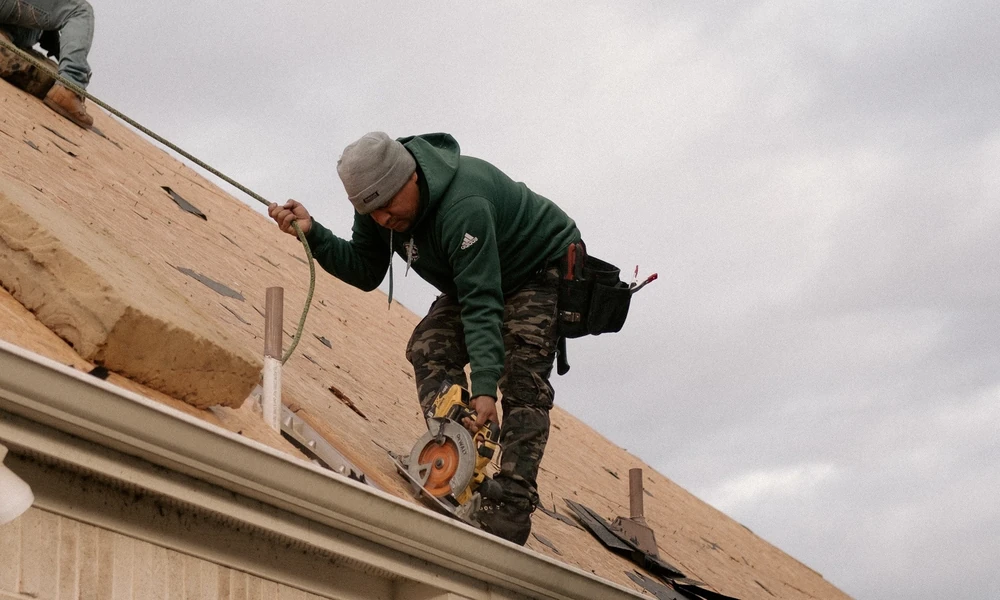
Two houses on the same Houston street can come through the same storm in very different shape. One loses a few ridge caps. The other loses a section of shingles, and rain pours through bare plywood into the upstairs bedrooms. Shingle brand and roof age explain some of that gap. Most of it comes from details hidden under the shingles, along the roof edges, and where the roof meets the walls.
These details are decided when a roof is installed or replaced and rarely revisited afterward. Most never show up on an invoice, and an inspector on the ground can miss them. They are also cheap to get right during a reroof and expensive to fix after a storm finds them.
If you want these points checked on your own house, Lion’s Crown Roofing operates as a roofing company in Houston that covers the whole storm cycle. Its crews take emergency calls when wind or a fallen limb opens up a roof. They come back for the repair, the replacement, or a completely new installation. You can get a sense of pricing before anyone climbs a ladder: the company’s online estimator gives a ballpark figure in seconds, and financing plans are available for larger jobs. Gutters, siding and attic insulation are handled by the same team. That matters, because several of the details below sit where those trades meet. Running your address through the estimator is a quick first step before booking a visit.
1. The Shape of the Roof
Roof geometry decides how wind pushes on a house before any material matters. A hip roof slopes down on all four sides, so wind tends to flow over it. A gable roof has flat triangular end walls that catch wind directly. Its overhanging rake edges also give gusts a lip to pry under.
Many Houston subdivisions use complex roofs that combine both styles, with gables over garages and front entries. Every valley, gable end and change in pitch adds an edge where wind pressure concentrates.
You can’t change your roof’s shape during a normal replacement. You can, however, pay closer attention to fastening and edge details on the gable ends, because that is where failures usually begin.
2. How the Deck Is Nailed Down
Shingles are only as secure as the plywood or OSB under them. Many older homes have roof decks fastened with smooth-shank nails, sometimes spaced widely. Smooth nails can pull out of the framing under strong uplift. When that happens, whole sheets of decking can come off, not just shingles.
During a full replacement, the old shingles come off and the deck is exposed. That is the one time it can be re-nailed. Research behind the FORTIFIED Roof standard found that switching to 8d ring-shank nails at closer spacing can double the uplift a roof deck can resist. It is one of the cheapest structural upgrades available, and it only makes sense to do while the deck is uncovered.
Homes in the Harris County coastal strip have extra rules. Properties east of Highway 146 inside the city limits of Seabrook, La Porte, Shoreacres, Pasadena and Morgan’s Point fall within the state’s designated catastrophe area. According to the Texas Department of Insurance, construction there must be certified to current building codes to stay eligible for TWIA windstorm coverage. A reroof in those areas needs the right inspection and paperwork, not just new shingles.
3. Whether the Deck Is Sealed
This is the detail that most often separates a repair claim from a gutted interior. A sealed roof deck has its seams taped, or the whole deck covered with a self-adhered membrane, before underlayment and shingles go on. If wind strips the shingles, that layer still keeps rain out.
The stakes are high. IBHS testing found that each inch of rain on an exposed deck can let in roughly nine bathtubs’ worth of water. Sealing the seams can cut that intrusion by up to 95 percent. Houston storms often bring heavy rain right behind the wind, so this one detail can decide whether a damaged roof leads to a tarp or to drywall, insulation and flooring replacement.
4. How the Edges Are Locked Down
Wind damage usually starts at the perimeter. Gusts get under the eaves and rake edges, lift the first course of shingles, and peel the roof back from there. Three edge details resist this.
The first is a drip edge installed over the underlayment and fastened at tight spacing. The second is a starter strip with factory adhesive, which bonds the first row of shingles down. The third is a high-wind nailing pattern, typically six nails per shingle instead of four. Most manufacturers list this as the installation method for higher wind ratings.
None of these are visible once the roof is finished, so it is worth asking about each one before a contract is signed.
5. Flashing Where the Roof Meets a Wall
Houston’s two-story subdivisions have many spots where a lower roof runs into a taller wall: over garages, porches and first-floor additions. Step flashing is woven into the shingles along those walls, and a small piece called kickout flashing at the bottom directs water into the gutter instead of behind the siding.
A missing kickout is one of the most common defects in newer homes. It doesn’t drip into the living room. Instead, water runs down inside the wall, rotting sheathing and framing below the joint. The first visible signs are often swollen trim, stained siding or soft wood near the bottom corner of that wall. Fixing it usually means opening up the siding as well as the roof, which is why roofing and siding work often end up in the same repair.
6. Gutters and the Boards Behind Them
Gutters affect storm performance more than most homeowners expect. Houston gets close to 50 inches of rain in a typical year, and much of it falls in short, heavy bursts. Gutters clogged with oak leaves and pine needles overflow at the worst moment. The backed-up water then soaks the fascia board and the lower edge of the roof deck.
Over a few years, that soaked wood softens. The gutter brackets then have little to grip, and the drip edge loses its backing. In a strong gust, a heavy, sagging gutter can pull away and take part of the roof edge with it.
Cleaning gutters in spring and fall, and replacing any soft fascia during the next roof job, keeps the roof edge firmly attached where it is most vulnerable.
