

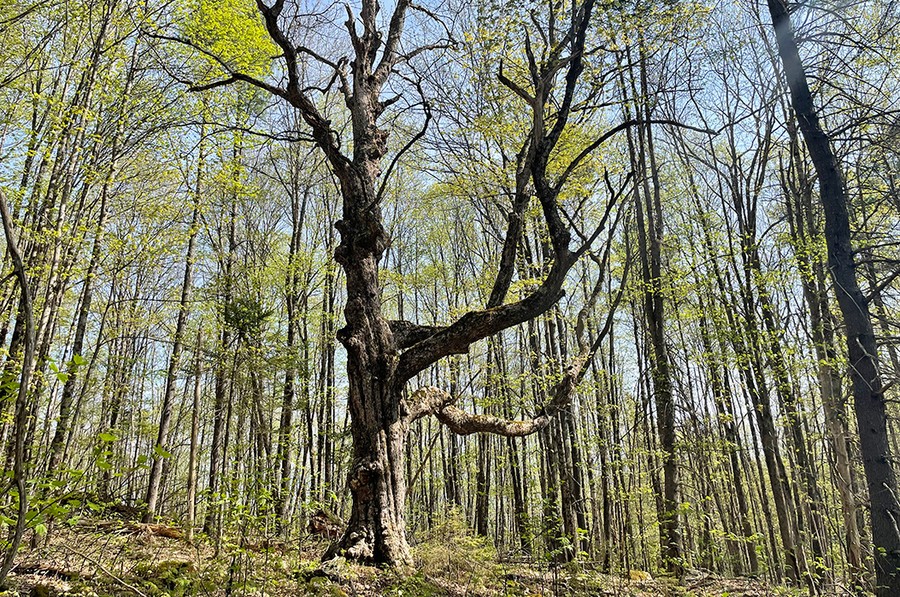
Forest conservation matters for New England’s future because you’re protecting the ecological infrastructure your towns rely on. Intact, connected watersheds filter drinking water, cut sediment and nutrient runoff, and lower treatment costs. Canopy cover captures particulates and ozone precursors while porous forest soils recharge groundwater. Easements, zoning, and current-use programs can curb fragmentation, limit invasives, and target corridor gains with parcel data and remote sensing. Keep going to see how these benefits scale across communities.
What Forest Conservation Means in New England
What does forest conservation mean in New England, where most woods are privately owned and land-use decisions happen town by town? It means you work across parcels and jurisdictions to keep forests functioning as connected habitat, resilient soils, and carbon-rich biomass while enabling rural economies. Because the region’s ownership mosaic is fragmented, you rely on forest governance that aligns zoning, conservation easements, current-use tax programs, and state wildlife action plans with measurable outcomes like canopy continuity and invasive-species control.
You also practice adaptive land stewardship: you set management goals, track indicators, and update harvest plans to reduce fragmentation, protect late-successional structure, and improve climate resilience. You innovate by using parcel-level data, remote sensing, and town-to-town compacts to target investments where connectivity and biodiversity gains are highest.
How Forest Conservation Protects Drinking Water and Air
How do conserved forests in New England turn rainfall and exhaust into safer drinking water and cleaner air? When you protect intact watersheds, you reduce sediment and nutrient runoff before it reaches reservoirs, cutting treatment costs and chemical inputs. Forest soils and wetlands deliver natural water filtration, while tree canopies capture particulates and ozone precursors that degrade air quality near roads and towns.
- You keep riparian buffers intact, lowering phosphorus loads and algal-bloom risk.
- You maintain porous forest floors that slow flow and boost groundwater recharge.
- You limit fragmentation through smart zoning and conservation easements.
- You align investments with Clean Water Act goals and state source-water plans.
You also reduce exposure to dust and smoke by maintaining continuous canopy cover across public and private lands.
How Forest Conservation Boosts Climate Resilience
Cleaner source water and air start in intact forests, but those same conserved landscapes also help you ride out the climate shocks New England is already seeing—heavier downpours, hotter summers, and longer dry spells. Conservation keeps ecological “infrastructure” functioning: diverse age classes, connected habitat, and protected soils that sustain forest resilience when pests and heat stress spike. You can target drought preparedness by safeguarding headwater forests, prioritizing climate-smart silviculture, and securing easements to prevent fragmentation and limit the spread of invasive species. You also strengthen wildfire governance by coordinating fuels management across ownerships, updating WUI standards, and funding rapid detection and response. Finally, you can scale carbon markets with rigorous additionality and permanence, directing revenue to stewardship that measurably increases adaptive capacity and long-term storage.
How Conserved Forests Reduce Flooding and Extreme Heat
Where does floodwater go when a storm drops 3–5 inches of rain in a day—a pattern New England’s already seeing more often as extreme precipitation increases? If you’ve conserved forests upstream, you’ve built green infrastructure that stores water in soils, wetlands, and root networks, then releases it slowly, reducing flood risk for downstream roads, culverts, and treatment plants.
- You increase infiltration and cut peak runoff that drives flash flooding.
- You stabilize streambanks, lowering sediment loads that choke stormwater systems.
- You protect floodplains, aligning land-use policy with FEMA maps and municipal MS4 permits.
- You expand the canopy and evapotranspiration, moderating urban heat and lowering cooling demand.
Invest in permanent protection and smart siting now; you’ll avoid higher retrofit costs later.
How Forest Conservation Supports Wildlife and Local Jobs
Protecting upstream forests doesn’t just blunt floods and heat—it also keeps New England’s habitat network intact and its rural economy working. When you conserve large, connected blocks, you reduce fragmentation that drives roadkill, tick-host imbalances, and local extirpations. You also secure wildlife corridors that let moose, bobcat, and migratory birds shift ranges as temperatures rise and winters shorten.
You can pair protection with smart policy: fund conservation easements, climate-resilient forestry, and culvert upgrades that reconnect streams and upland movement routes. Those investments scale job creation across surveying, trail crews, forest management, wood-product innovation, and remote-sensor monitoring. You’ll also stabilize recreation revenue—hunting, fishing, and tourism—while keeping working forests productive and communities’ tax base resilient.
Frequently Asked Questions
How Can Landowners Get Financial Incentives to Conserve Their Forests?
You can receive financial incentives by enrolling your land in incentive programs such as conservation easements, state current-use tax programs, and USDA NRCS cost-share (EQIP/CSP). You’ll boost landowner benefits through carbon-credit markets and habitat payments when you document baseline conditions and implement approved management plans. Work with a land trust or forester to meet monitoring, reporting, and verification rules. Stack grants with tax deductions to maximize returns and resilience.
What Laws and Regulations Govern Forest Conservation in New England?
New England forest conservation is governed by state forestry, wetlands, and endangered-species laws, plus federal Clean Water Act, Endangered Species Act, and NRCS programs, often implemented through local zoning. About 80% of New England’s forest is privately owned, so rules frequently target harvest practices and habitat impacts. You’ll navigate permitting, Best Management Practices, and conservation easements. Conservation funding and landowner incentives come via state tax programs, grants, and USDA cost-share contracts.
How Do Conservation Easements Work, and Can They Be Reversed?
You create a conservation easement by recording a voluntary, binding deed restriction that limits development while keeping you as the landowner; a qualified land trust or agency monitors compliance and enforces conservation laws. You negotiate allowed uses (timber, trails, habitat practices) and baseline ecological conditions, then document them for audits. Easement reversibility is rare: courts typically require “changed conditions,” public-interest findings, and repayment or substitution of equivalent conservation value.
Where Can I Find Maps of Protected Forests and Priority Parcels?
Picture a green quilt of ridgelines and stream corridors on your screen: you’ll find maps and datasets in state GIS portals (e.g., MassGIS, GRANIT, Maine GeoLibrary), the USGS Protected Areas Database (PAD-US), and The Nature Conservancy resilience layers. You can also use municipal assessors’ GIS for parcel detail. For priority parcels, check state wildlife action plans and land trust priorities. Pair results with landowner incentives data.
How Can Residents Volunteer or Advocate for Local Forest Conservation Projects?
You can plug into local forest conservation by joining town conservation commissions, land trusts, and watershed groups offering volunteer opportunities for monitoring, invasive removal, and trail work. You can advocate by testifying at planning boards, supporting open-space bonds, and pushing zoning that protects riparian buffers and wildlife corridors. You can scale impact through seedling-distribution events and citizen-science apps that generate plot-level data for grant proposals and state-level climate-forest metrics.
Conclusion
When you back forest conservation in New England, you’re protecting more than scenery—you’re safeguarding drinking water sources, filtering air pollution, and storing carbon at measurable scales. Conserved forests blunt flood peaks, cool neighborhoods during heat waves, and keep soils and streams functioning. You also sustain habitat connectivity and outdoor economies tied to forestry and recreation. With smart zoning, conservation easements, and climate funding, you’re not just saving trees—you’re hitting the nail on the head for resilience.
