

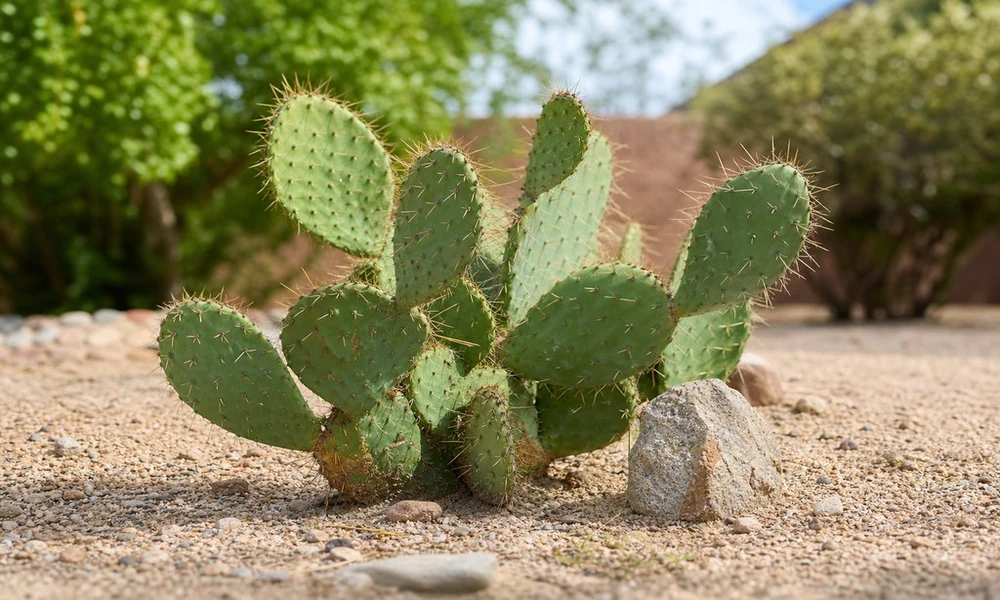
Cactus plants in a yard
It may look harmless at first, but cactus plants can take over walkways, crowd out other plants and leave behind sharp bits for people and pets to step on.
To remove a cactus plant, you’ll need to know how to get rid of a cactus safely – it’s more than simply ripping it out. Different types of cacti (there’s a decent explainer at https://britannica.com/plant/cactus) can be challenging in different ways, including having deep root systems or segments that break off easily and leave thorny debris in the ground.
The right approach to getting rid of a cactus safely depends on the type of cactus plant, its size and its location. Removing a small cactus plant in an empty garden bed is a fairly straightforward DIY job. On the other hand, a large, established cactus plant growing near structures or utility lines might be best left to the professionals.
Safety and Assessment
Before you start digging or cutting, take a good look at the whole cactus plant (from a safe distance!). What is its overall shape? Does it have a rounded mound-like shape, a columnar shape, branching stems, or flat pads? Are there any baby cacti sprouting around the edge? You may want to remove these, too, or they will eventually grow into separate cactus plants.
What is nearby? Take note of the location of:
- Walkways, patios, play areas, pet areas
- Landscape lighting or other electrical features
- Sprinkler systems
- Structures including foundations, fences and buried landscape edging
- Other plants you want to keep
Are there cactus pieces that have broken off lying on the ground nearby?
Cactus spines are to be feared! Wear protective clothing including eye protection, long sleeves, closed-toe shoes and heavy-duty gloves. Use long-handled tools if you can, to keep your face and hands at a distance from the plant. Even if a cactus doesn’t seem to have any obvious spines, it may still have tiny prickly hairs that are irritating and hard to remove.
Removal Decisions
Not every cactus plant needs to be completely removed. Pruning can solve the problem if the plant is top-heavy or getting too close to a walkway or play area; if relocation or selective cutting addresses the issue, the complete-removal approach outlined in this guide to clearing cactus from your yard may be unnecessary. Transplanting a cactus can also be the right solution if it’s healthy but better suited to a different location.
On the other hand, if the plant is diseased or damaged, if it crowds out other plants, if you keep finding new cactus plants growing where they are unwelcome or unsafe – then it’s probably time to learn how to get rid of a cactus for good.
When is it not necessary to remove a cactus plant? If the plant is small, healthy, not a tripping hazard, and unlikely to grow much bigger, consider transplanting it or just installing a landscape edging or other border.
Warning! As cacti get larger they can put pressure on structures. They may even crack or break them. Don’t assume you know which way the plant will lean or fall as you’re cutting it apart – large sections can break off at unexpected angles!
Physical Removal
For large cactus plants, it’s easier to cut away the top growth (stems, branches or pads) before digging at the roots.
Use sturdy, sharp tools that are clean. Cut away manageable pieces, starting on the outside and working your way in. Put the pieces you cut away in a sturdy bucket or on a tarp or other protected surface where no one will step on them. Don’t throw cactus pieces or drag them through your yard, as they can drop thorny bits or take root in good soil, and will be a pain to fish out of gravel or grass later.
Tip: It may seem like you should gather all the cut-away cactus pieces in one big pile, but this is not a good idea. Instead, tidy up each area you’ve worked in before moving on to the next. It’s safer, and won’t leave you tramping through a minefield of prickly cactus pieces!
Root Removal
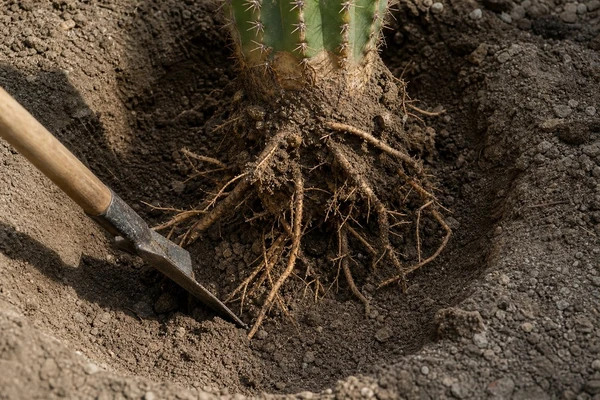
Cactus roots and garden soil
Now you’re ready to learn how to uproot a cactus! Expose the cactus roots by digging in a circle around the plant. At first, angle your shovel outwards instead of digging straight down into the center of the root ball. Gradually work your way around the plant, cutting through cactus roots as you expose them.
Even for a smallish cactus, try digging at least two feet beyond the visible base, as the plant may have roots or suckers at a distance from the parent plant. Try to lift out the entire root system and remaining center, crown or base. If necessary, continue cutting away chunks and digging up cactus root pieces. Don’t just give up and leave the center in place!
Many cactus plants can regrow from pieces, so missed stem, pad or root pieces can result in new plants popping up later.
Professional Removal
Removing a cactus plant can be a tricky process! If you’re facing a particularly big, thorny or awkwardly-placed cactus plant, or one that’s close to a structure or other plants you don’t want damaged, it’s time to call in the cavalry! Get some pros in to teach you how to remove a cactus safely and efficiently.
